Crushing Equipment in India: Complete Guide to Crushers & Crushing Plants
Crushing Equipment in India: Complete Guide to Crushers & Crushing Plants
Choosing the right crushing equipment is an important decision for mining, quarrying, aggregate production, construction, recycling and material-processing projects.
A crusher is not selected only by looking at its size or production capacity. The right equipment depends on several factors, including the material being processed, feed size, material hardness, required output, production capacity, crushing stage, product shape and overall plant configuration.
For businesses planning a new crushing plant or upgrading an existing operation, understanding the role of each crusher can make equipment selection easier and more practical.
This guide explains the major types of crushing equipment in India, how different crushers work, where they are used, how crushing plants are configured, and what to consider before selecting a crusher manufacturer.
What Is Crushing Equipment?
Crushing equipment is machinery used to reduce large rocks, minerals, ores, construction materials or other feed materials into smaller and more manageable sizes.
Depending on the application, crushing may be carried out in multiple stages.
A typical crushing circuit can include:
Primary Crushing → Secondary Crushing → Tertiary Crushing → Screening → Washing
The exact configuration depends on the feed material and the required final product.
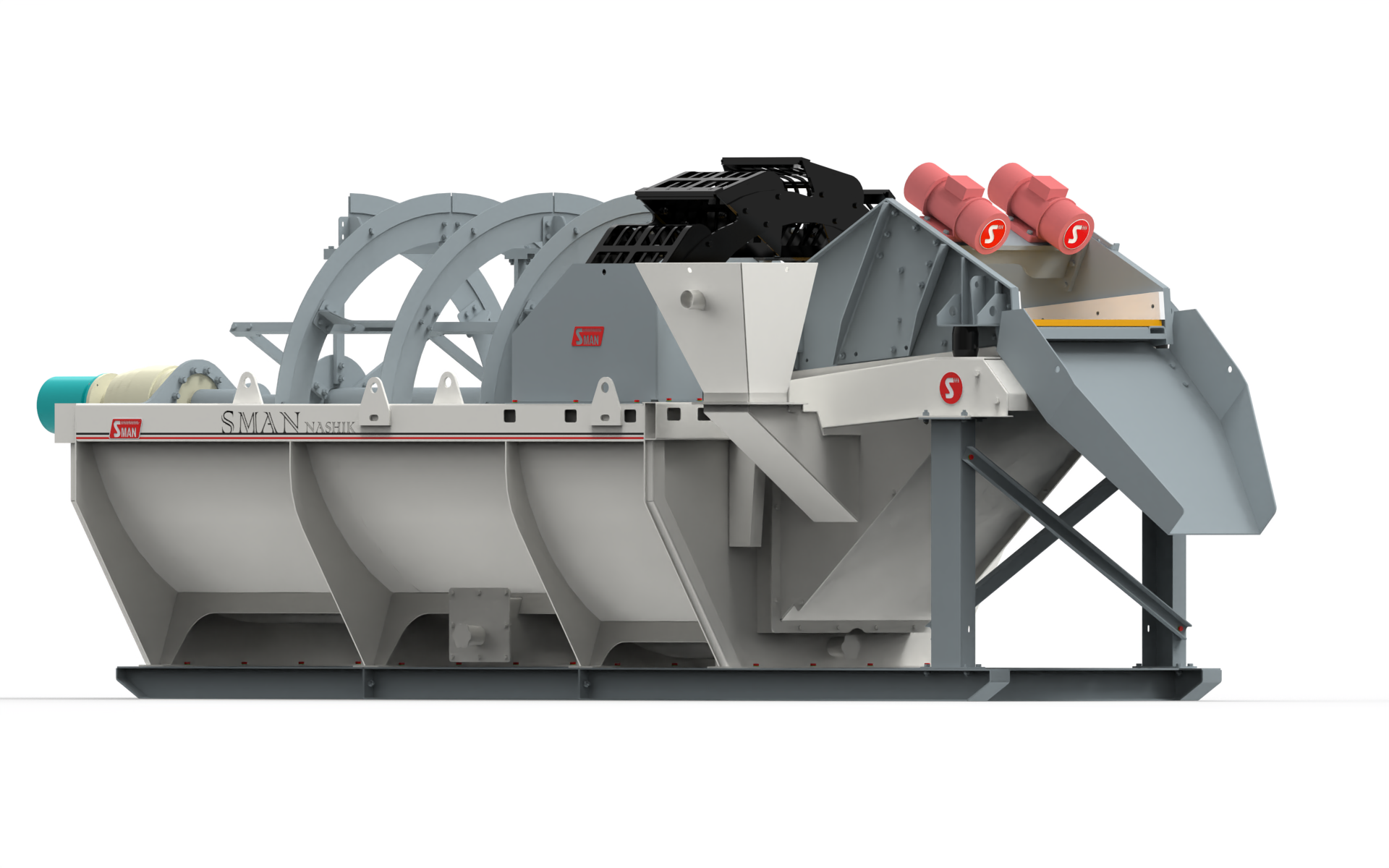
For example, a complete four-stage crushing, screening and washing plant may combine jaw crushers, cone crushers, VSI equipment and sand-washing equipment. Shakti Mining's complete plant solutions are designed for applications starting from 80 TPH and above.
Why Is Crusher Selection Important?
Different materials require different crushing methods.
Granite, basalt, quartzite, sandstone, iron ore, construction rubble and other materials can have different hardness, abrasiveness, feed sizes and processing requirements.
Before selecting a crusher, consider:
- Material type
- Material hardness
- Abrasiveness
- Maximum feed size
- Required capacity
- Desired output size
- Product shape
- Crushing stage
- Screening requirements
- Available installation space
- Mobility requirements
- Maintenance requirements
Shakti Mining's own FAQ similarly identifies material type, hardness, feed size, production capacity, output size and crushing stage as key factors in crusher selection.
Types of Crushing Equipment
The most suitable crusher depends on the application and stage of crushing.
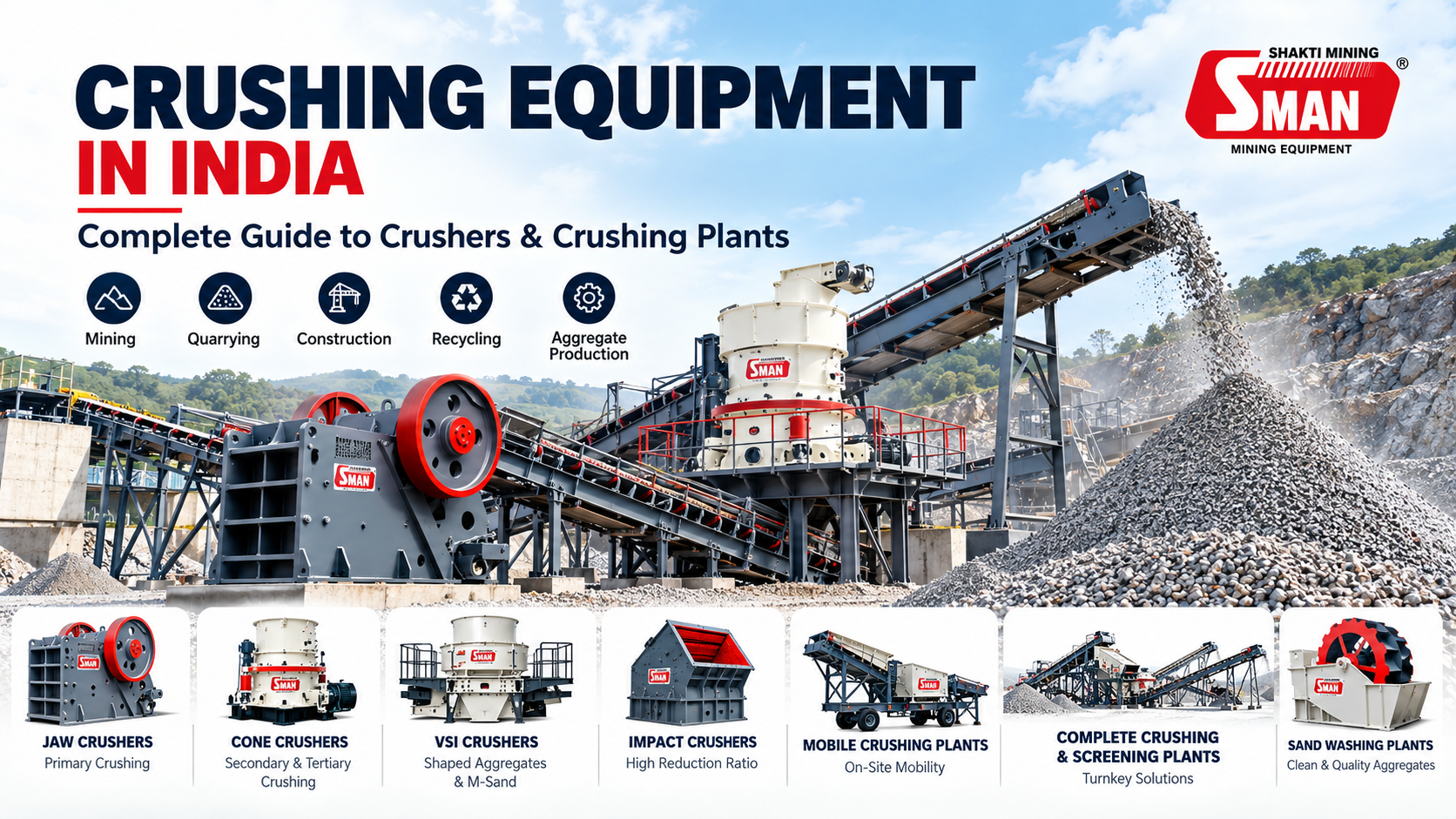
The major equipment categories include:
- Jaw Crushers
- Cone Crushers
- Vertical Shaft Impactors
- Impact Crushers
- Mobile and Wheel-Mounted Crushing Plants
- Mini Rubble Crushers
- PTO Crushers
- Coal Crushers
- Complete Crushing & Screening Plants
1. Jaw Crushers
A jaw crusher is generally used for primary crushing.
It reduces large pieces of rock or other feed material through compression between a fixed jaw and a moving jaw.
Jaw crushers are commonly considered when the application involves large feed sizes and tough materials.
Typical applications include:
- Hard rock crushing
- Mining
- Quarrying
- Construction
- Demolition
- Building rubble
- Mineral processing
SMAN Jaw Crushers are designed for primary-stage crushing and are used for materials such as rock, minerals, ROM and building rubble. The product information on Shakti Mining's website also describes features such as heavy-duty construction, modular body design, cast steel components and manganese steel jaw plates.
2. Cone Crushers
Cone crushers are commonly used in secondary and tertiary crushing applications.
They use compression crushing between the mantle and concave to reduce material size and improve product shape.
Cone crushers can be considered when a project requires controlled reduction after primary crushing.
Common applications include:
- Aggregate production
- Quarrying
- Mining
- Hard rock processing
- Secondary crushing
- Tertiary crushing
SMAN Cone Crushers are designed for secondary-stage crushing and can also be used in tertiary and quaternary applications depending on the plant configuration. The product information highlights features including high crushing capacity, heavy-duty construction and optional mobile attachment.
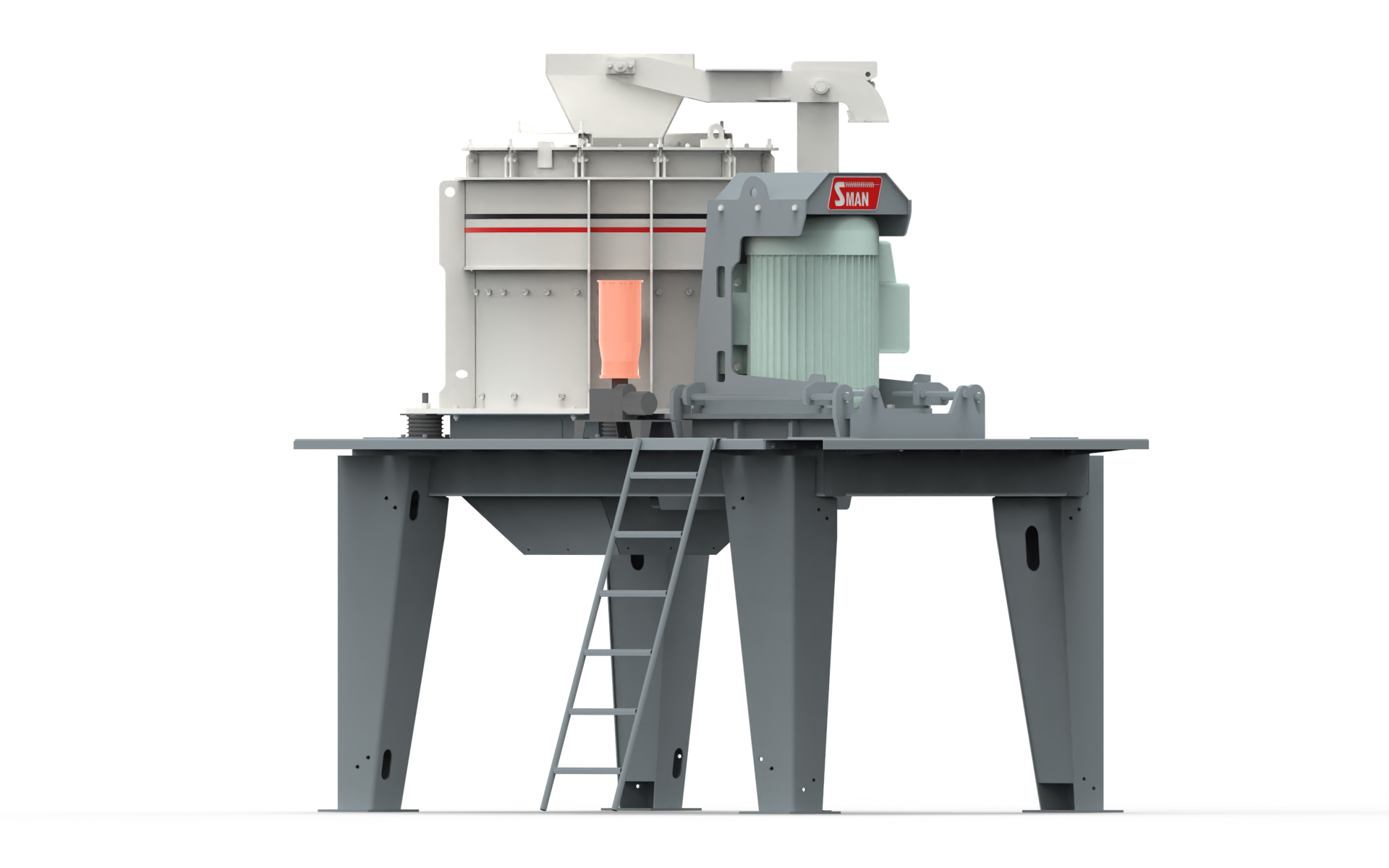
3. Vertical Shaft Impactors (VSI)
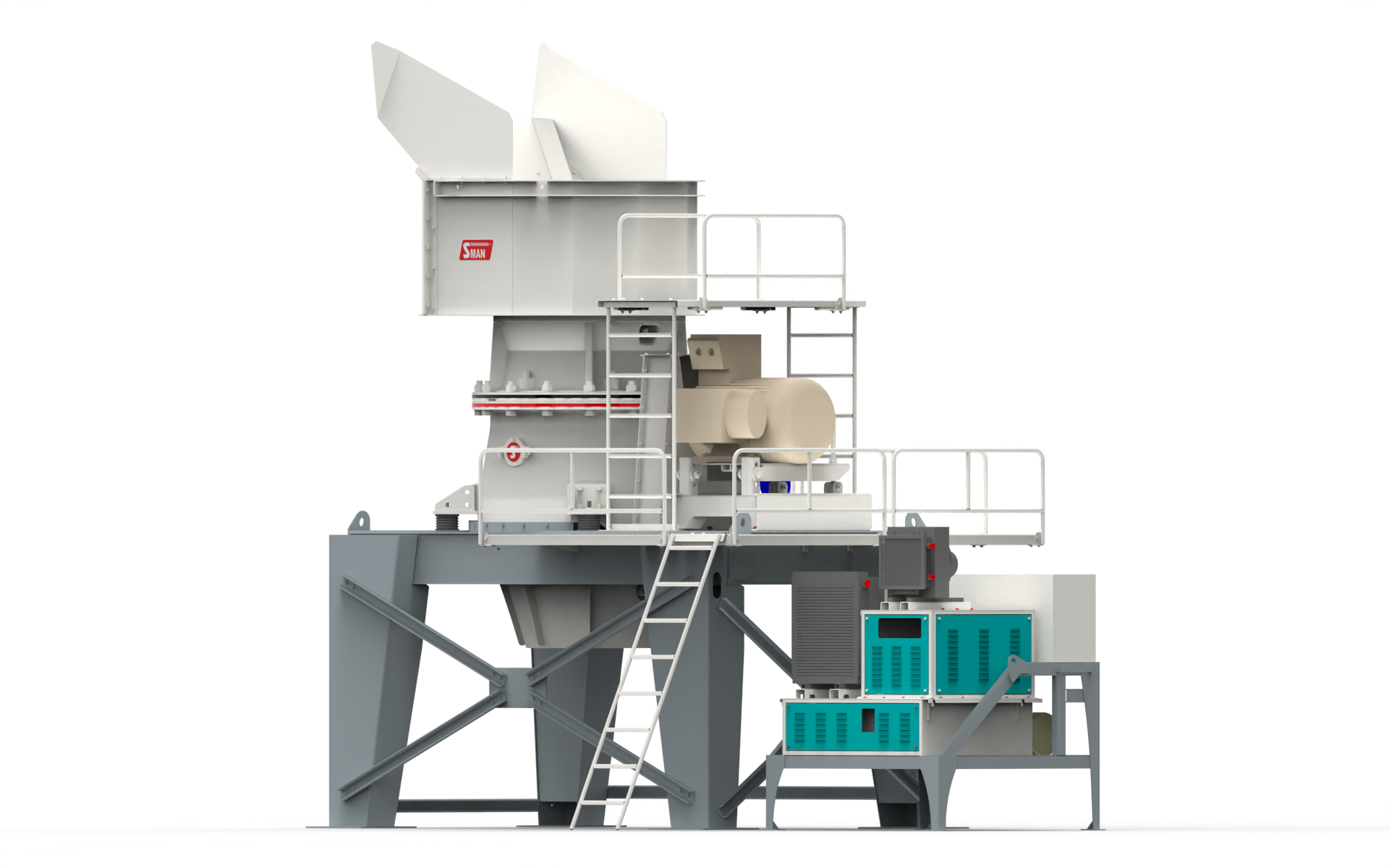
A Vertical Shaft Impactor (VSI) is an impact-based crushing machine commonly used for producing shaped aggregates and manufactured sand.
VSI equipment can be particularly useful when the final product requires improved particle shape.
Typical applications include:
- Manufactured sand
- Aggregate shaping
- Tertiary crushing
- Mining
- Quarrying
- Recycling
Shakti Mining describes SMAN VSI equipment as being used for high-quality aggregates and manufactured sand, with applications in recycling and mining.
👉 SMAN Vertical Shaft Impactors
4. Complete Crushing & Screening Plants
For larger projects, purchasing individual machines may not be enough.
A complete crushing and screening plant integrates multiple machines into a coordinated material-processing system.
A typical plant may include:
Feeding → Primary Crusher → Secondary Crusher → Tertiary Crusher → Screening → Washing → Stockpiling
Depending on the material and final product requirements, a plant may combine:
- Jaw Crusher
- Cone Crusher
- VSI
- Vibrating Screen
- Feeders
- Conveyors
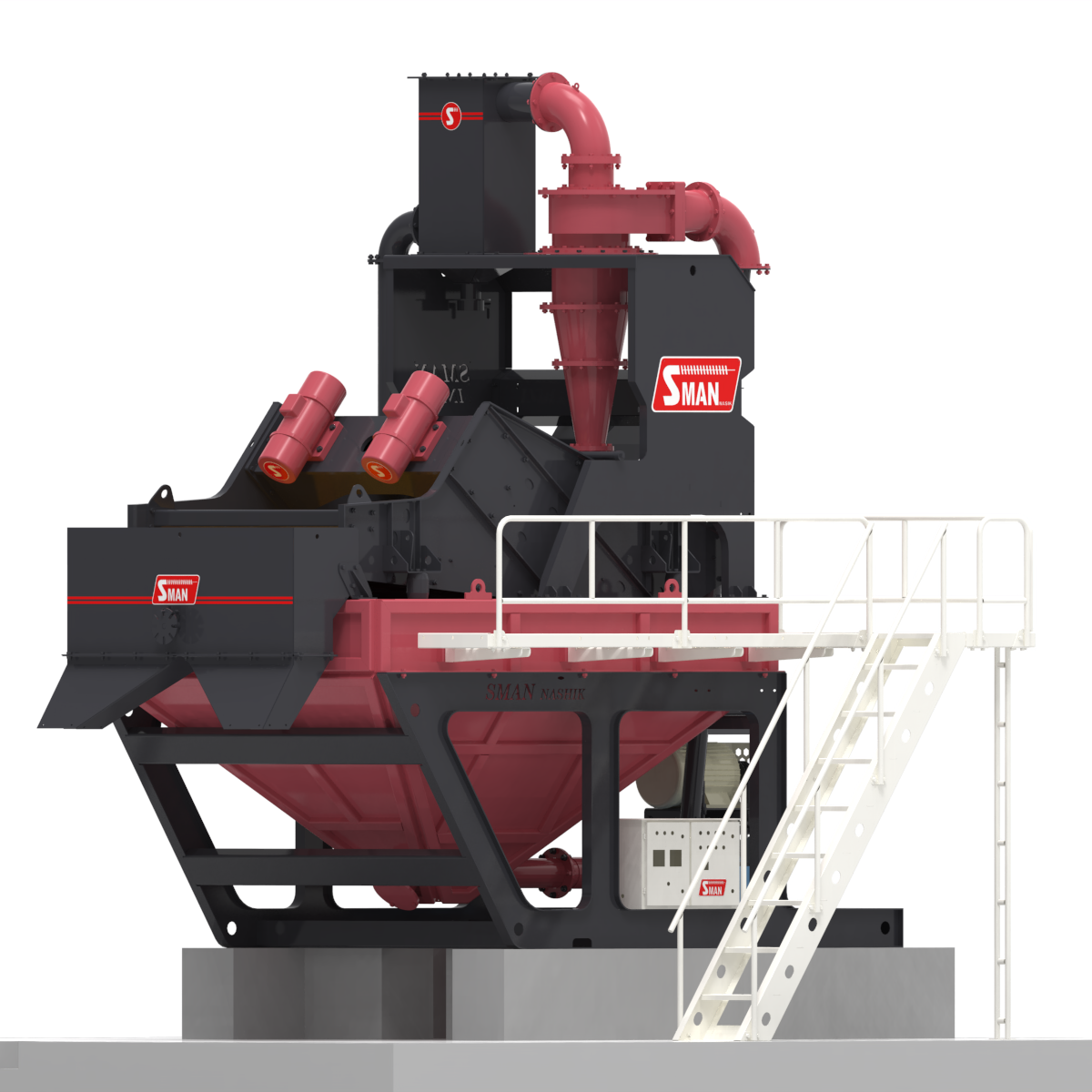
- Sand Washing Equipment
- Surge Bins
- Hoppers
Shakti Mining's four-stage plant configuration includes SMAN Jaw Crushers, Cone Crushers, VSI and Sand Washing units.
👉 Complete Crushing & Screening Plants
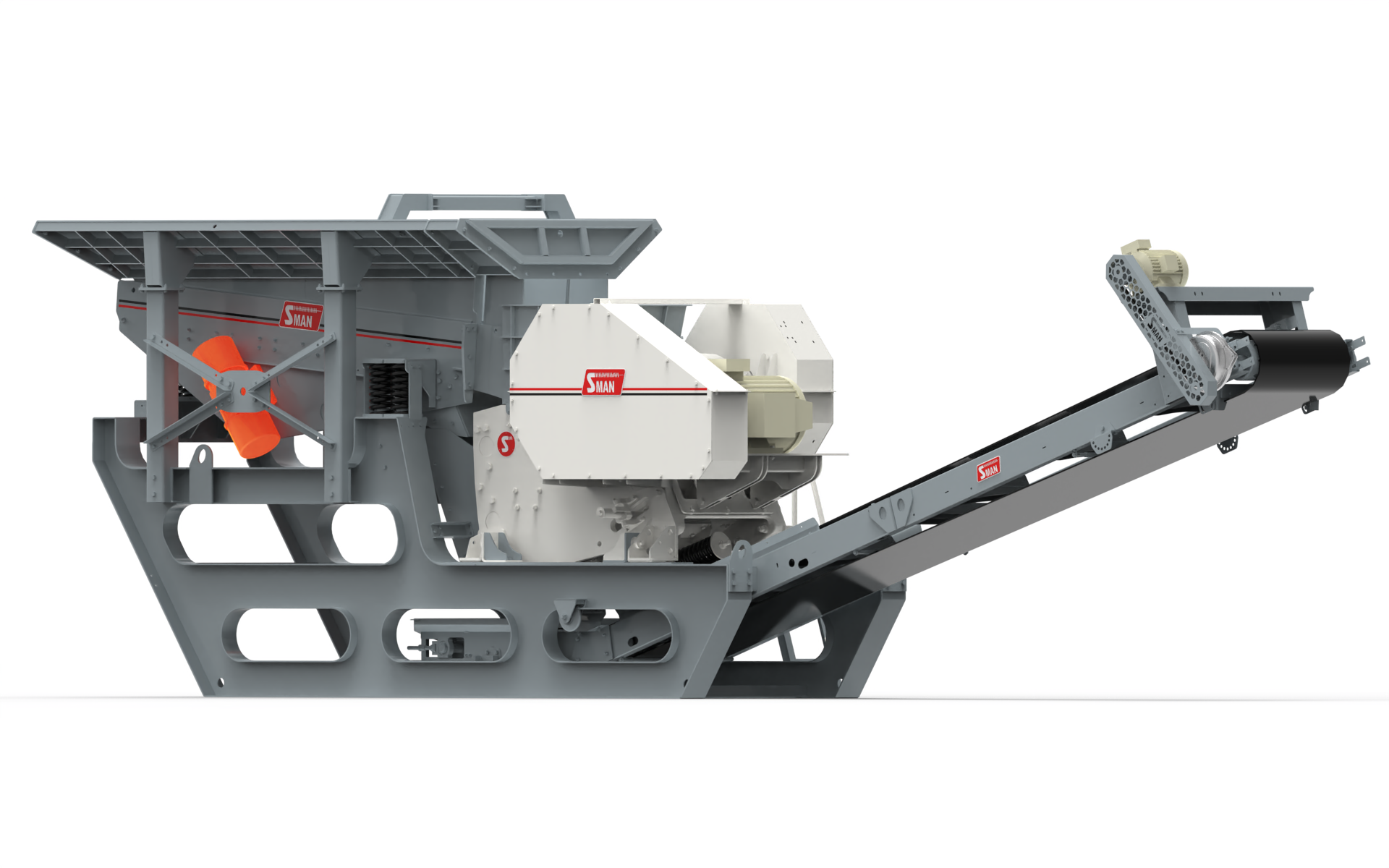
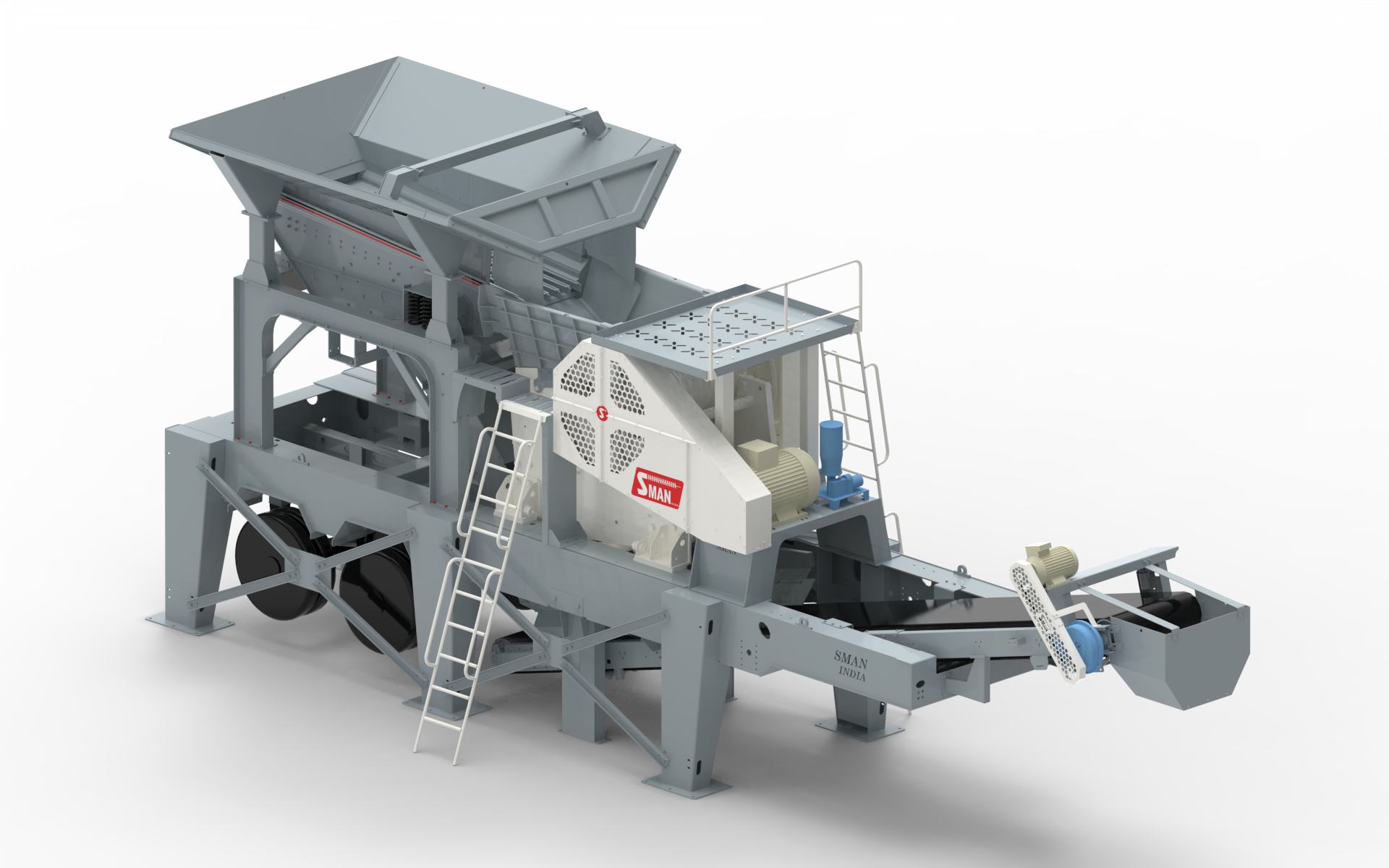
5. Mobile and Wheel-Mounted Crushing Plants
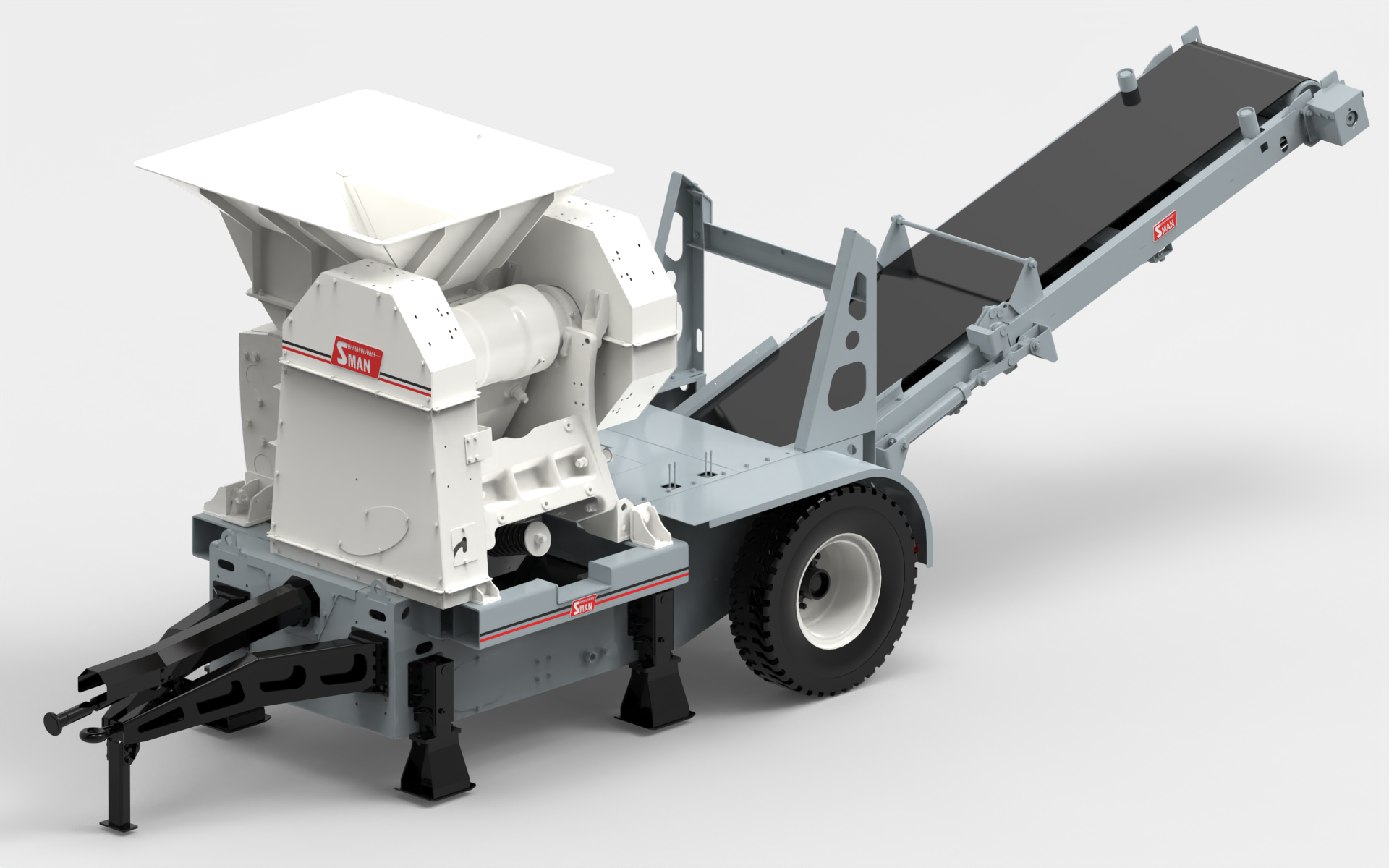
Mobility becomes important when equipment needs to move between sites or when a permanent RCC foundation is not desirable.
Wheel-mounted plants can provide:
- Easier transportation
- Faster installation
- Inter-site movement
- Reduced foundation requirements
- Integrated feeder and conveyor arrangements
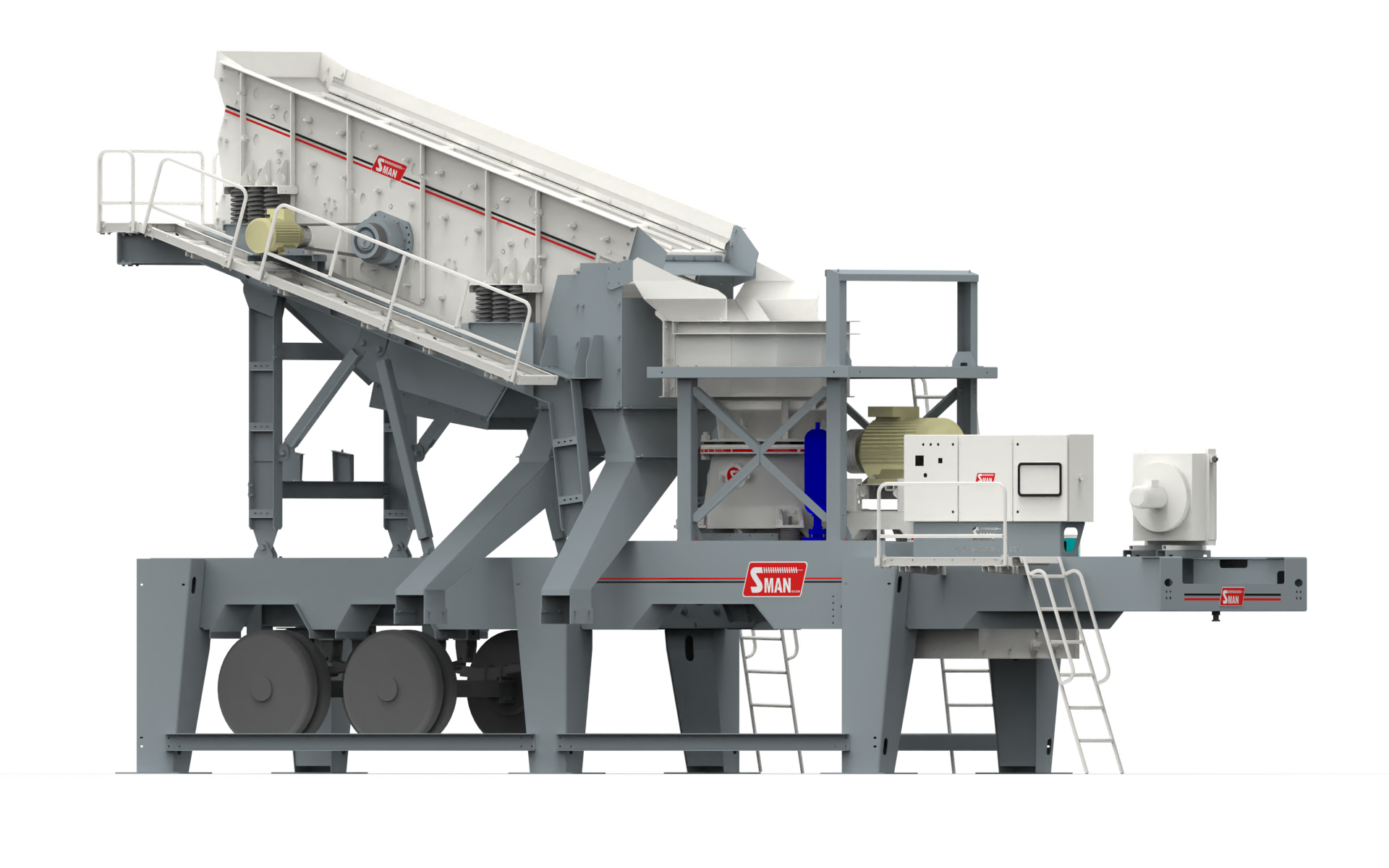
SMAN Wheel Mounted Plants use a vibratory feeder, jaw crusher and discharge conveyor configuration and are designed for applications involving materials such as granite, quartzite, basalt, sandstone and iron ore.:
6. Mini Rubble Crushers
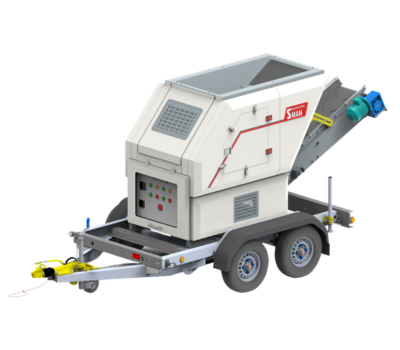
Construction and demolition projects can generate large amounts of rubble and waste material.
Mini rubble crushers are designed for smaller-scale crushing applications where compact equipment and mobility are important.
They can be considered for:
- Building rubble
- Construction waste
- Light demolition waste
- Urban construction sites
- Small recycling applications
SMAN RBF Series Mini Rubble Crushers are positioned for light building rubble and construction waste, with a compact footprint intended for quick setup at the crushing location.
7. PTO Crushers
A PTO crusher is powered through the Power Take-Off (PTO) shaft of a tractor rather than using a dedicated engine.
This type of crusher can be useful where tractor-powered mobility is preferred.
Applications can include:
- Construction waste
- Concrete blocks
- Bricks
- Building rubble
- Certain rock materials
- Recycling applications
SMAN PTO Crushers are designed to be towed by a tractor and powered through its PTO system, with features such as hydraulic adjustment, conveyor drive and transport-oriented design.
8. Coal Crushers
Coal crushing applications can require equipment capable of handling large lumps and abrasive material conditions.
SMAN Coal Jaw Crushers are designed as heavy-duty primary crushers for coal applications and feature adjustable discharge size and robust construction.
How Does a Crushing Plant Work?
A crushing plant normally follows a controlled material flow.
Step 1: Feeding
Raw material enters the plant through a hopper or feeding system.
Step 2: Primary Crushing
The primary crusher reduces large feed material to a smaller size.
A jaw crusher is commonly used at this stage.
Step 3: Secondary Crushing
The material may then enter a cone crusher or another secondary crushing machine.
Step 4: Tertiary Crushing
VSI or other tertiary equipment may be used when additional size reduction or particle shaping is required.
Step 5: Screening
Screens separate material according to size.
Oversized material may be returned to the crushing circuit.
Step 6: Washing
Where clean manufactured sand or washed aggregates are required, sand-washing equipment can be integrated into the plant.
Step 7: Final Product
The finished material is transported to stockpiles or the next stage of processing.
How to Choose the Right Crusher for Your Project
This is one of the most important questions buyers ask before purchasing crushing equipment.
Start with these seven questions:
1. What material are you crushing?
Identify whether the feed is:
- Granite
- Basalt
- Sandstone
- Iron ore
- Limestone
- Coal
- Construction waste
- Concrete
- Building rubble
- Other minerals
2. What is the maximum feed size?
The crusher must be capable of accepting the largest feed material without creating unnecessary blockages or operational problems.
3. What production capacity do you need?
Capacity is generally expressed in TPH — tonnes per hour.
Your required output should be considered before selecting the crusher model.
Shakti Mining currently lists crushing equipment capacities ranging from 30 TPH to 500 TPH across its equipment range.
4. What output size do you need?
The required final product determines the crushing stages and equipment combination.
5. What type of product shape is required?
If the project requires cubical aggregates or manufactured sand, tertiary shaping equipment such as VSI may be considered.
6. Is mobility important?
If the plant needs to move between sites, mobile or wheel-mounted configurations may be more suitable.
7. What support will you need after installation?
Consider:
- Spare parts
- Maintenance
- Technical support
- Installation
- Commissioning
- Operator support
- Long-term service requirements
Primary vs Secondary vs Tertiary Crushing
Understanding crushing stages helps when designing a plant.
| Crushing Stage | Main Purpose | Common Equipment |
|---|---|---|
| Primary | Large feed reduction | Jaw Crusher |
| Secondary | Further size reduction | Cone Crusher |
| Tertiary | Fine crushing & shaping | VSI / Cone |
| Screening | Size separation | Vibrating Screen |
| Washing | Cleaning sand/aggregates | Sand Washing Plant |
The actual configuration should always be determined according to the material, capacity and required final product.
Crushing Equipment for Different Applications
Mining
Mining operations may require heavy-duty crushers capable of handling hard and abrasive materials.
Quarrying
Quarries often require multi-stage crushing and screening to produce different aggregate sizes.
Construction
Construction projects can require crushing equipment for aggregates, concrete and construction waste.
Recycling
Compact and mobile crushing solutions can be useful where construction and demolition waste needs to be processed closer to the source.
Manufactured Sand
Where manufactured sand is required, crushing, shaping, screening and washing can be combined depending on the desired product specifications.
How to Select a Crusher Manufacturer in India
Selecting the machine is only one part of the purchasing decision. The manufacturer and support system are also important.
Before finalizing a supplier, evaluate:
- Product range
- Engineering capability
- Manufacturing facilities
- Equipment specifications
- Application experience
- Installation support
- Spare parts availability
- After-sales service
- Customization capability
- Project requirements
- Export experience
Shakti Mining Equipments Private Limited is based in MIDC Industrial Area, Ambad, Nashik, Maharashtra, and its website states that the company has been operating since 1986. Its product range covers crushing and screening plants along with mining and construction equipment.
👉 Crusher Manufacturer in India
Why Nashik Is Relevant for Crushing Equipment Manufacturing
Nashik is an important industrial location in Maharashtra and is home to Shakti Mining's manufacturing operation in the Ambad MIDC industrial area.
For buyers searching for a crusher manufacturer in Nashik, crushing equipment manufacturer in Maharashtra or a manufacturer serving projects across India, a local manufacturing base can make communication, technical coordination and site-related discussions more convenient.
Shakti Mining's listed address is W-140(A) to 143(A), MIDC Industrial Area, Ambad, Nashik – 422 010, Maharashtra, India.
Crushing Equipment for Export Markets
Crusher equipment is not limited to domestic applications.
Shakti Mining's product information states that its crushing equipment has been exported to markets across the Gulf, Africa and Asia, including countries such as Oman, UAE, Saudi Arabia, Kenya, South Africa, Zambia, Nepal and Sri Lanka.
For international buyers, important considerations include:
- Equipment specifications
- Capacity
- Material characteristics
- Plant configuration
- Shipping requirements
- Installation
- Spare parts
- Technical documentation
- Local support
What Equipment Is Needed for a Complete Crushing Plant?
A complete plant can contain several interconnected machines.
Depending on the application, equipment may include:
- Hopper
- Feeder
- Jaw Crusher
- Cone Crusher
- VSI
- Vibrating Screen
- Conveyors
- Surge Bin
- Sand Washing Machine
- Electrical Control Panel
- Dust-control systems
- Structural supports
Shakti Mining's allied equipment range includes hoppers, feeders and surge bins designed to support crushing plant operations.
Crusher Maintenance: What Should Operators Check?
Regular maintenance is important for reliable crushing plant operation.
Operators should follow the manufacturer's recommended maintenance schedule and monitor:
- Wear parts
- Bearings
- Lubrication
- Belts
- Conveyor systems
- Jaw plates
- Mantle and concave
- Vibrating screens
- Electrical systems
- Hydraulic systems
- Safety guards
Preventive maintenance can help identify developing problems before they result in unnecessary downtime.
👉 Crusher Maintenance Tips — [Internal link to your existing maintenance blog]
Frequently Asked Questions
What is the best crusher for hard rock?
There is no single crusher that is best for every hard-rock application. Selection depends on hardness, abrasiveness, feed size, capacity, required output and crushing stage.
Which crusher is used for primary crushing?
Jaw crushers are commonly used for primary crushing, particularly when the feed contains large rocks or tough materials.
What is a cone crusher used for?
Cone crushers are commonly used for secondary and tertiary crushing where controlled size reduction is required.
What is a VSI crusher used for?
VSI crushers are commonly used for particle shaping, tertiary crushing and manufactured sand applications.
What capacity crusher do I need?
The required capacity depends on your target production, material characteristics, feed size and plant configuration. Shakti Mining lists equipment capacities ranging from 30 TPH to 500 TPH across its range.
Can a crushing plant be customized?
Yes, crushing plants can be configured according to material, capacity, output requirements and the required combination of crushing, screening and washing stages.
Does Shakti Mining manufacture complete crushing plants?
Yes. Shakti Mining offers complete crushing, screening and washing plant solutions, including four-stage configurations.
Where is Shakti Mining located?
Shakti Mining Equipments Private Limited is located in MIDC Industrial Area, Ambad, Nashik, Maharashtra, India.
How do I choose the right crusher manufacturer in India?
Compare the manufacturer's product range, engineering capability, equipment suitability, technical support, spare parts, installation and after-sales service against your project requirements.
Conclusion
Choosing crushing equipment should begin with the application, not simply the machine name.
Material type, hardness, feed size, production capacity, required output, product shape and crushing stages all influence the final plant configuration.
A small recycling project may require a compact rubble crusher, while a large quarry may require a complete multi-stage crushing and screening plant involving jaw crushers, cone crushers, VSI equipment, screens and conveyors.
For larger projects, working with a manufacturer that can understand the complete material flow — rather than only supplying an individual machine — can simplify equipment selection and plant planning.
If you are planning a new crushing plant, upgrading an existing plant or looking for crushing equipment for mining, quarrying, aggregates, construction or recycling, evaluate the complete application before selecting the equipment.
Need help selecting crushing equipment for your project? Contact Shakti Mining to discuss your material, capacity and output requirements.